







Step 1: Election workers finish counting eligible ballots, including any that need another look
Texas election workers and officials have a process for finishing the count, accounting for ballots like yours, making results official, and auditing the totals. Some steps overlap, and the work continues long after election night. Here’s how your ballot fits into that process. You can follow the key dates on our Midterms Matter Texas Timeline.
Your ballot may already be included in the election night results. But some ballots need more review before they can be counted. Others, including certain military and overseas ballots, can arrive after Election Day and still qualify.
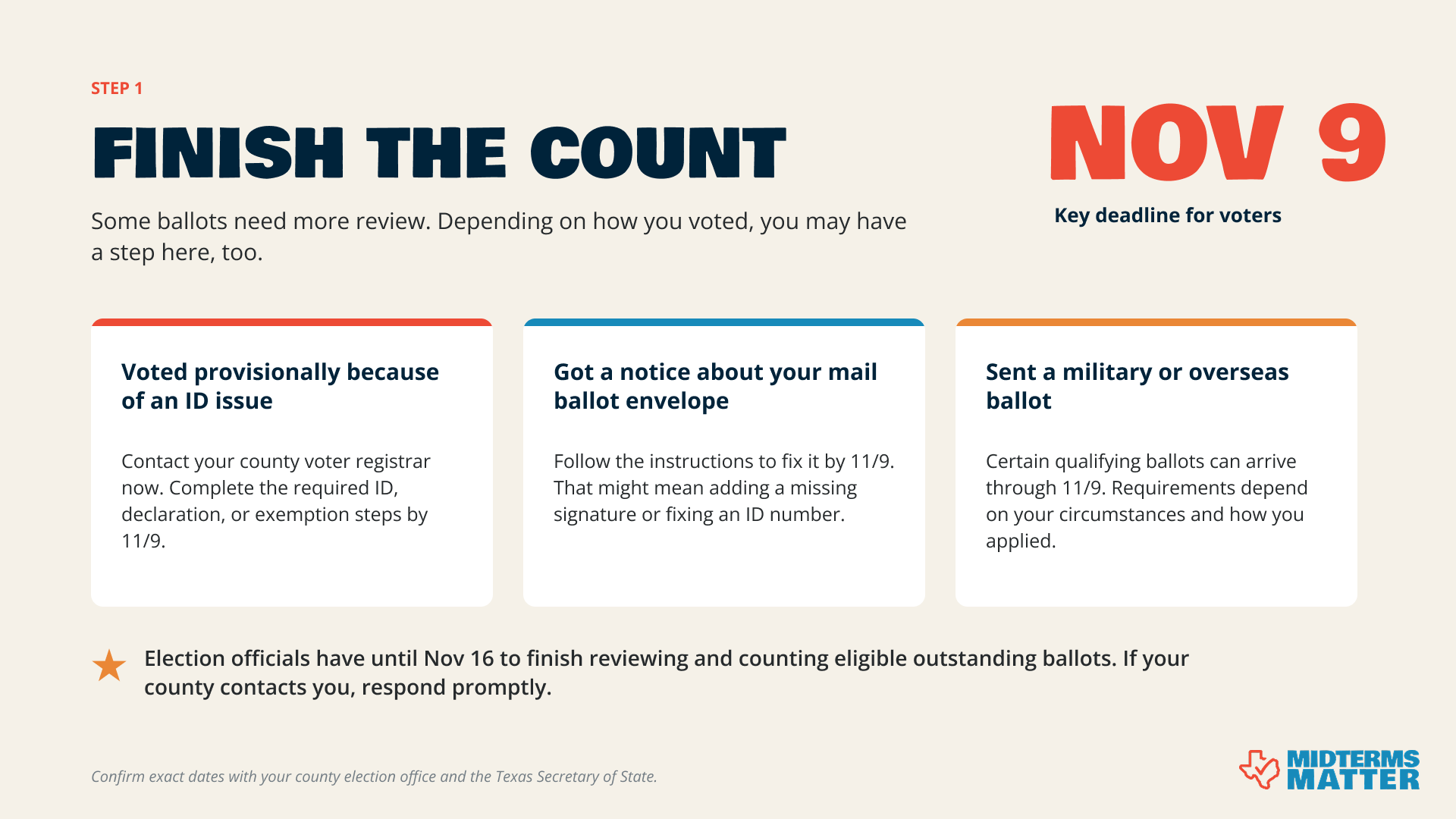
Depending on how you voted, you may have a step here, too. Nov 9 is an important deadline:
- You voted provisionally because of an ID issue. Contact your county voter registrar now. You need to complete the required ID, declaration, or exemption steps by 11/9.
- You received a notice about your mail ballot envelope. Follow the instructions to correct the issue by 11/9. That might mean adding a missing signature or fixing an ID number.
- You sent a qualifying military or overseas ballot. Certain ballots can arrive through 11/9. The requirements depend on your circumstances and how you applied.
If your county contacts you about your ballot, respond promptly. If you’re unsure what to do, your county election office can walk you through it.
Election officials have until Nov 16 to finish reviewing and counting eligible outstanding ballots.
Step 2: Election workers account for your ballot in the records
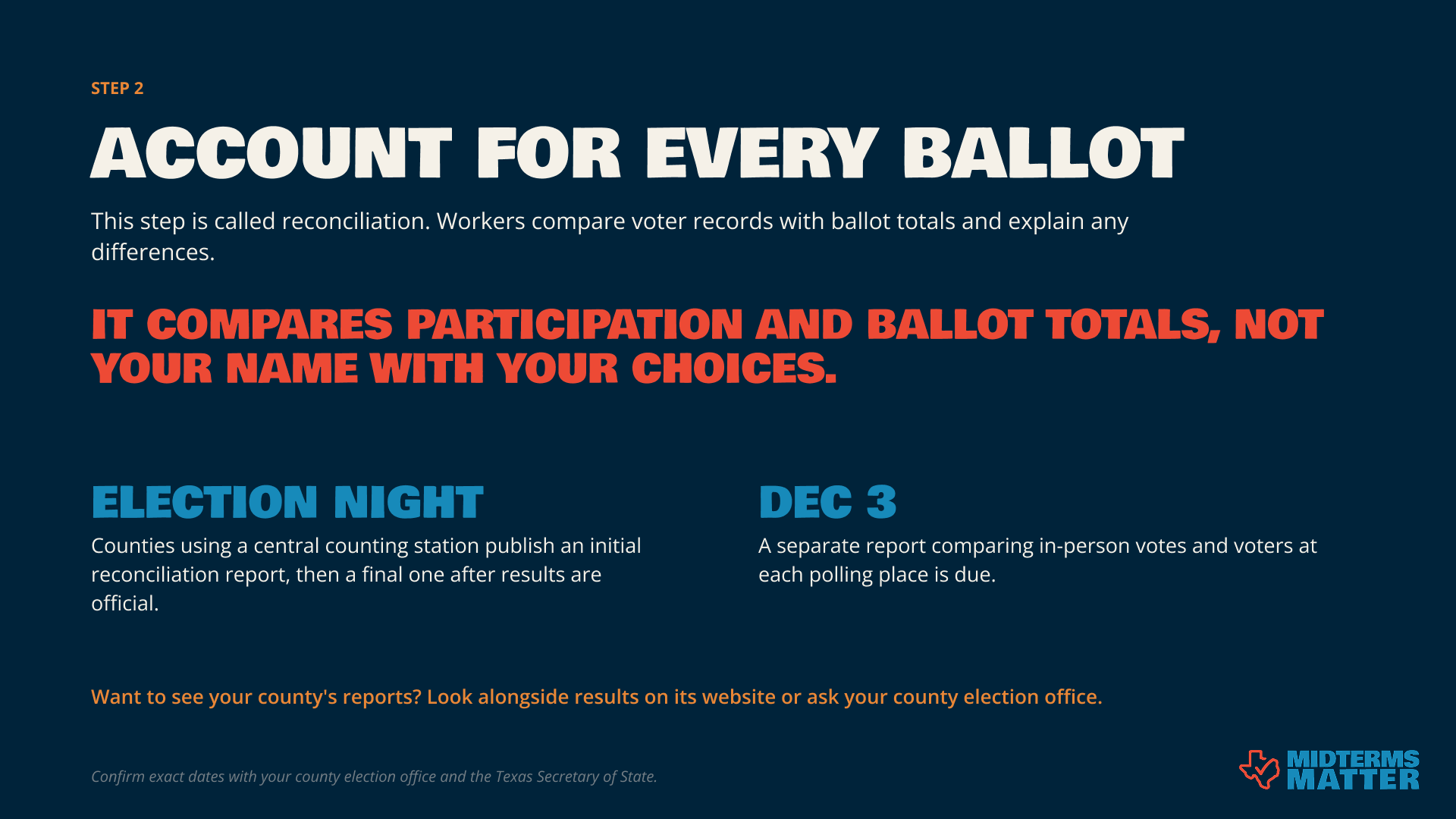
When you vote, election workers create a record of your participation. They compare those voter records with ballot totals to account for the ballots and explain any differences. This step is called reconciliation. It compares participation and ballot totals, not your name with your choices.
Say you cast a provisional ballot. Your participation is recorded, but officials may still be reviewing whether your ballot can be counted. The reconciliation report accounts for that.
Counties using a central counting station publish an initial reconciliation report on election night and a final one after results are made official. A separate report comparing in-person votes and voters at each polling place is due by Dec 3.
Want to see how your county accounted for the ballots? Look alongside the election results on its website, or ask your county election office where to find the reports.
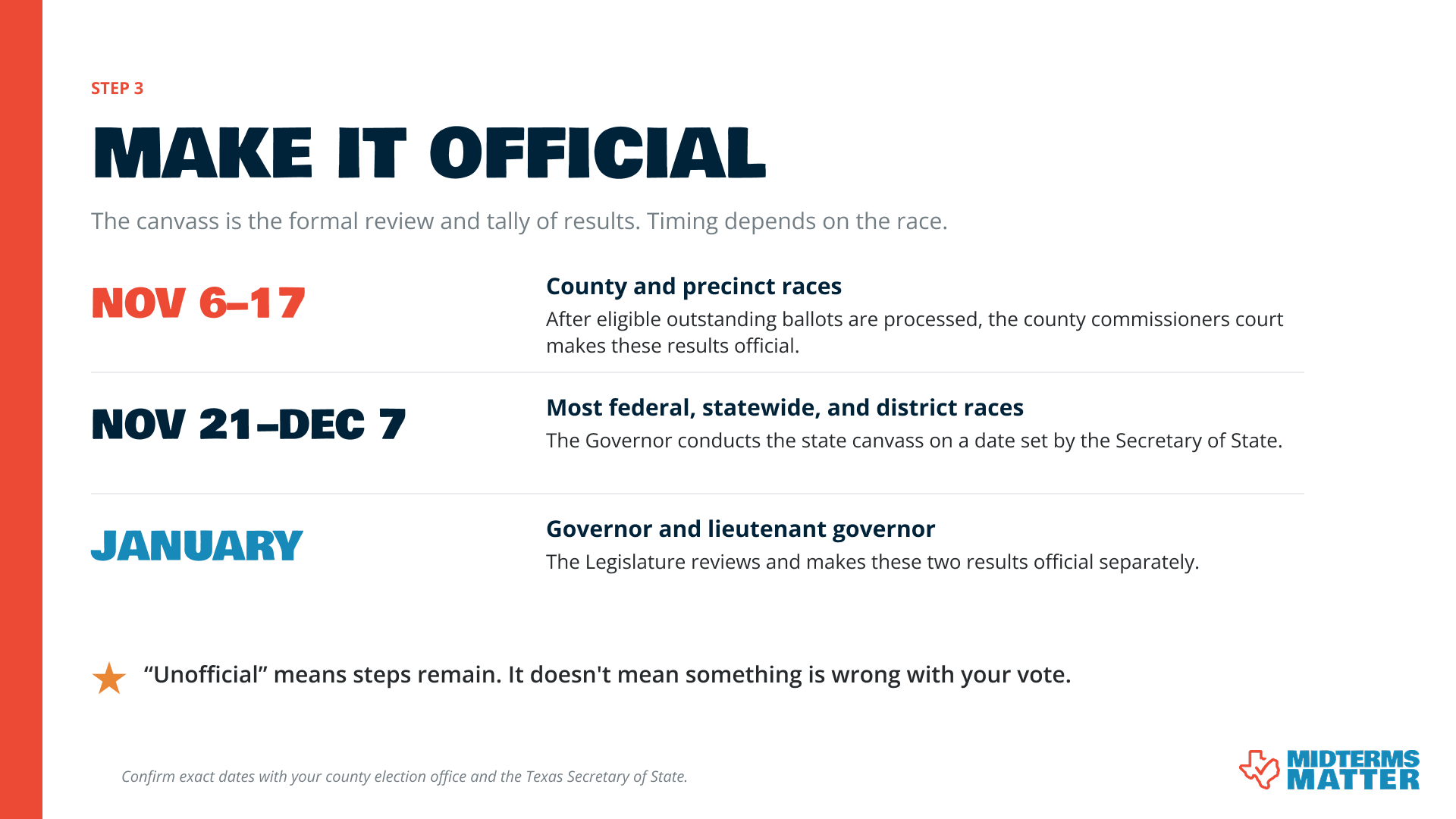
Step 3: Officials make the results of your vote contributed to official
On election night, the totals you see are labeled unofficial. That means there are still steps to complete.
One of those steps is the canvass, or the formal review and tally of election results.
The timing depends on which race you’re following:
- County and precinct races: Nov 6–17. After eligible outstanding ballots are processed, the county commissioners court reviews the county’s totals and makes these results official.
- Most federal, statewide, and district races: Nov 21–Dec 7. The Governor conducts the state canvass on a date set by the Secretary of State.
- Governor and lieutenant governor: January. The Legislature reviews and makes these two results official separately.
Your county may hold its canvass on a different day from a neighboring county. Each works within the required window.
Note: “Unofficial” means steps remain. It doesn’t mean something is wrong with your vote.
Step 4: Election workers use paper ballots to audit the count
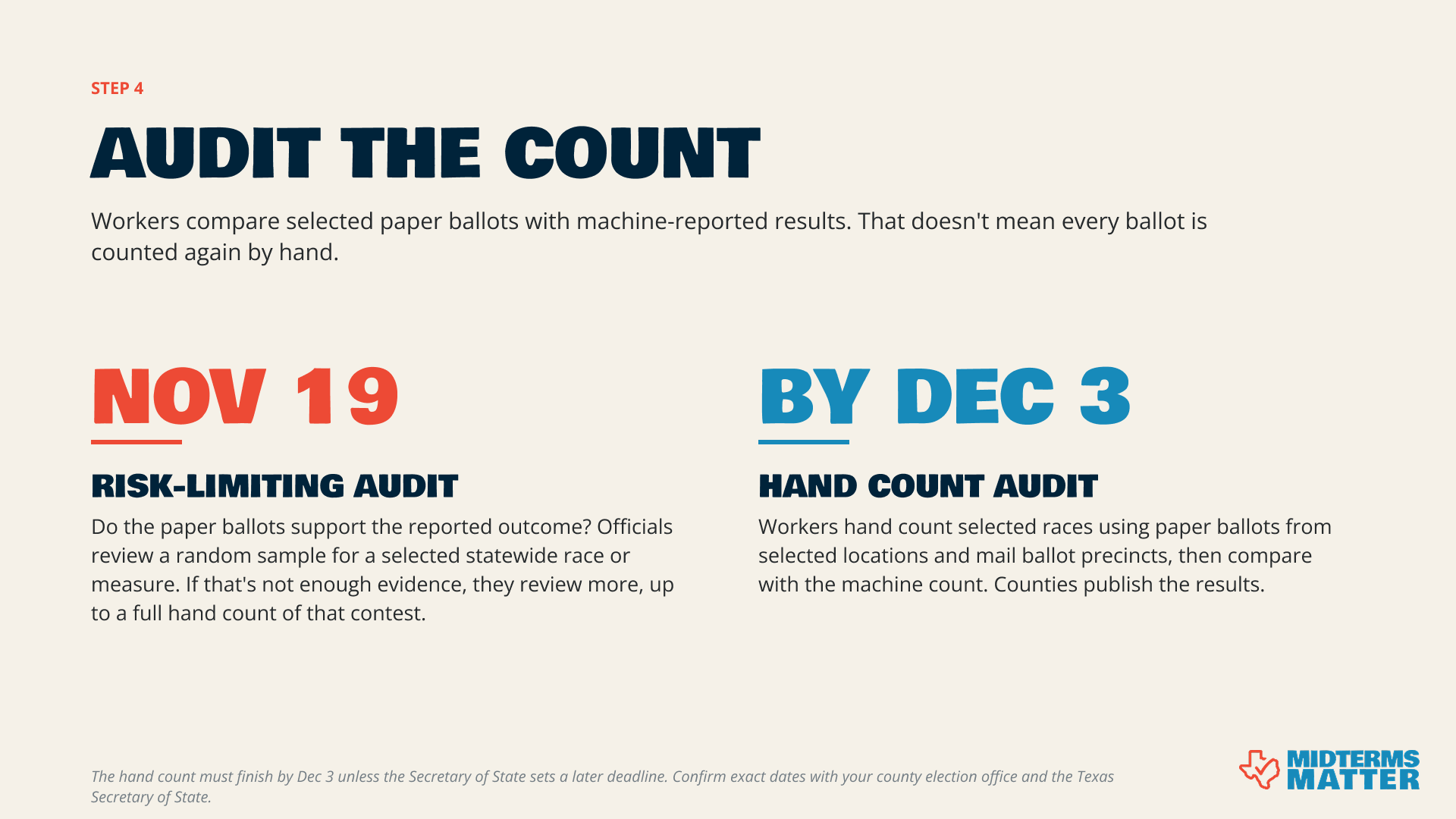
Your ballot is part of a larger count. To check that count, election workers examine selected paper ballots and compare what they find with machine-reported results.
That doesn’t mean every ballot is counted again by hand. Texas has two scheduled audits this year, each with a specific purpose.
First, the risk-limiting audit.
The name is technical, but the question is straightforward: Do the paper ballots support the reported outcome?
Officials review a random sample of paper ballots for a selected statewide race or measure. If the sample doesn’t provide enough evidence, they review more. That can expand to a full hand count of that contest.
The state calendar lists Nov 19 as the audit date, with planning materials setting aside Nov 19–20 for the work.
Then, the post-election hand count audit.
Election workers count votes by hand in selected races or ballot measures. They use paper ballots from selected early voting locations, Election Day locations, and mail ballot precincts, then compare those totals with the machine count.
The Secretary of State chooses the required locations, precincts, and contests. And this audit must start by the first business day after the Secretary of State certifies that the risk-limiting audit is complete. It must finish by Dec 3, unless the Secretary of State sets a later deadline.
Your county publishes its hand count audit results, so you can see what the review found. Some of this work happens after local results are official. That’s part of the schedule.
Your ballot stays on file
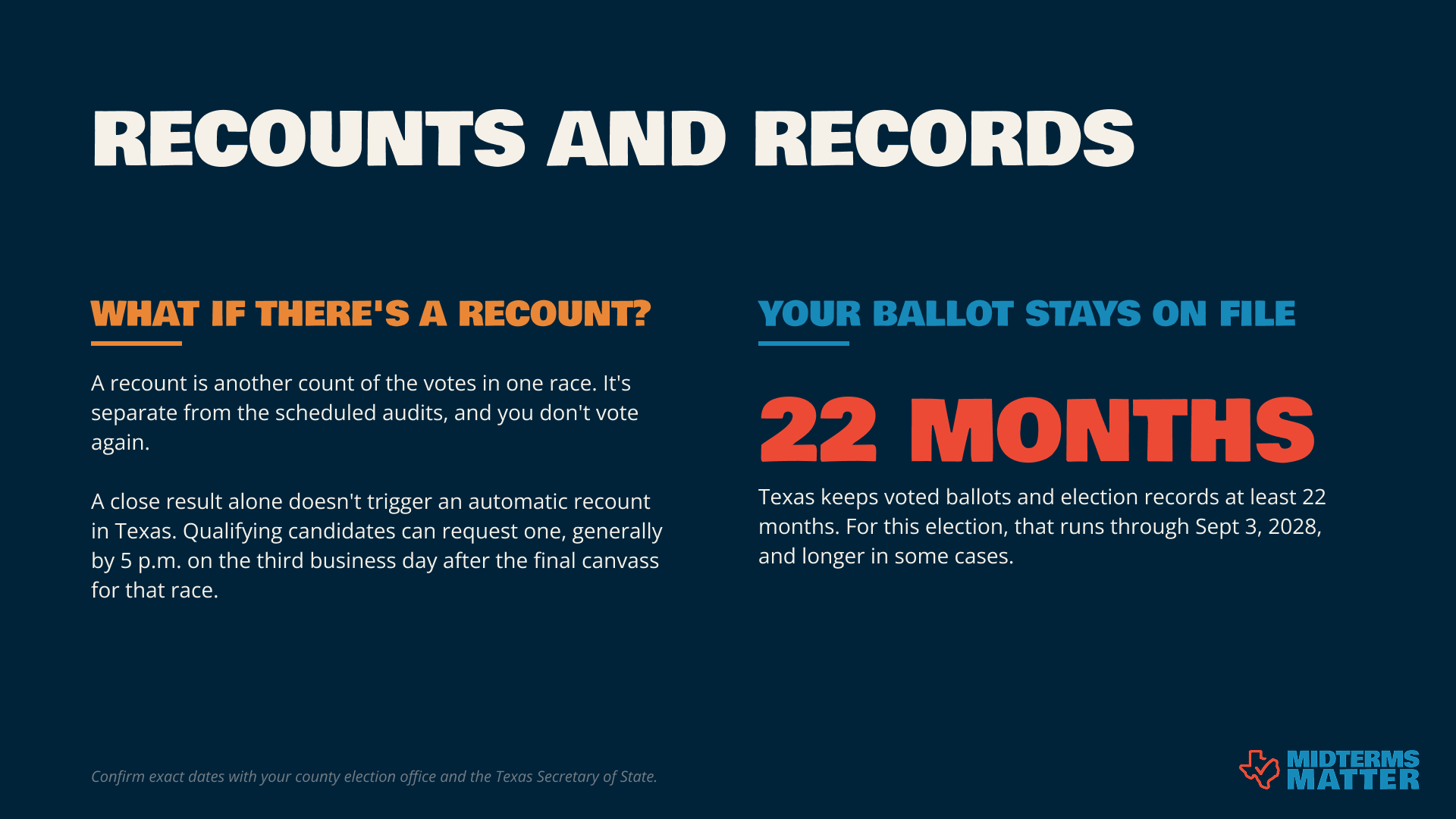
Your ballot isn’t discarded when winners are announced. Texas requires voted ballots and other election records to be kept for at least 22 months after Election Day. For this election, that runs through Sept 3, 2028. Records may need to be kept longer if there’s an election contest, criminal investigation, or public information request that hasn’t been fulfilled.